
Geothermal Repair & Maintenance in Raleigh, NC
If your geothermal system is running longer, heating unevenly, struggling to cool, or suddenly costing more to operate, something in the heat pump, loop, airflow, controls, or supporting equipment may need attention. Raleigh Heating & Air offers geothermal repair and maintenance in Raleigh, NC to help homeowners find the cause, restore normal operation, and keep these systems working efficiently through both summer and winter.
Call (919) 890-7789 or contact us online to schedule geothermal repair or maintenance in Raleigh.
Signs Your Geothermal System Needs Repair
A geothermal system works differently from a conventional furnace or outdoor air-source heat pump, but the symptoms are often familiar. You may notice longer run times, weak airflow, rooms that drift away from the thermostat setting, unusual noises, higher electric use, or a system that switches on and off more often than it used to.
As a trusted, local HVAC company in Raleigh, we look at the complete system before deciding where the problem lives. A geothermal heat pump depends on the indoor equipment, buried loop, refrigerant circuit, ductwork, thermostat, pumps, controls, and electrical components all working together. One weak point can change the way the whole system behaves.
Geothermal Heat Pump Repair for Common Problems
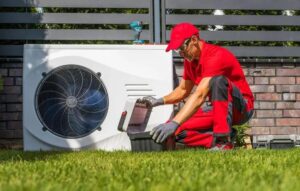
When we troubleshoot a geothermal unit, we want to know what changed and when it started. That gives us a better direction than replacing parts until the symptom disappears. We use straightforward pricing before approved repair work begins.
Common geothermal repair needs include:
- Weak heating or cooling: We check system operation, airflow, refrigerant conditions, controls, and heat-transfer performance to find out why comfort has dropped.
- Long run cycles: A system that rarely shuts off may be dealing with airflow trouble, thermostat issues, equipment wear, or a condition affecting heat exchange.
- Frequent cycling: Short run times can point toward controls, thermostat problems, airflow issues, or other conditions that need testing.
- Unusual noises: Pumps, motors, bearings, ductwork, and other moving components can all create noise when something changes.
- Higher electric bills: A sudden increase in operating cost can be a clue that the geothermal heat pump is working harder than it should.
- Thermostat problems: Incorrect readings or control issues can make a healthy system behave like it has a larger mechanical problem.
- Airflow problems: Restricted filters, duct conditions, blower issues, and pressure changes can reduce comfort even when the refrigeration side is operating.
- Electrical or control failures: We inspect wiring, connections, safeties, relays, motors, and other electrical components involved in system operation.
- Refrigerant concerns: Charge and refrigerant-side performance are checked when system readings point us in that direction.
- Loop-side concerns: When the indoor equipment checks out, we look at the ground loop and the circulation pumps and piping that move fluid through it, since reduced heat transfer can mimic a failing heat pump.
What We Check During Geothermal Maintenance
Routine geothermal maintenance is less about making adjustments for the sake of it and more about establishing how the system is operating before a small change becomes a service call. The current system may still be heating and cooling, but measurements can show where airflow, electrical operation, controls, or refrigerant performance have started drifting.
During a geothermal tune-up, our technicians can inspect system components, check duct condition and airflow, review refrigerant charge, inspect electrical connections and safety controls, lubricate applicable moving parts, and calibrate the thermostat. Regular maintenance also gives us a chance to catch hidden problems before peak summer or winter demand exposes them.
Why Annual Geothermal Service Still Matters
One advantage of geothermal equipment is that the outdoor weather does not change the ground temperature nearly as dramatically as it changes the air temperature. That helps the system move heat against a more stable source or sink below ground. It does not mean the mechanical equipment is maintenance-free.
The heat pump still contains motors, controls, refrigerant components, electrical connections, filters, and moving parts that wear over time. The duct system still affects airflow. Scheduling maintenance about once a year gives us a chance to check those pieces before a long Raleigh cooling season or a winter cold snap puts more hours on the system.
A maintenance plan makes annual geothermal service easier to schedule and keep consistent. Contact Raleigh Heating & Air to learn about plan options for your system.
Repair the System You Have or Start Planning Ahead?
A geothermal problem does not automatically mean replacement. Many control, airflow, electrical, thermostat, pump, or heat-pump issues can be repaired when the rest of the system remains in good condition.
If repairs are becoming frequent, a major component has failed, or the indoor equipment is reaching the later part of its service life, it may be worth comparing repair with geothermal installation and replacement. We can explain what we find and help you judge the repair in the context of the system as a whole instead of looking only at today’s failure.
Help With Larger HVAC Decisions
Major geothermal or HVAC work can be a significant household expense. Financing options are available for qualifying repairs, replacements, and system upgrades, subject to credit approval.
The EASE Comfort® Program is another option for qualifying HVAC systems, combining eligible equipment, installation, repairs, and scheduled maintenance through a monthly payment structure. That can be worth discussing when an older system has moved beyond a practical repair.
Raleigh Geothermal Repair & Maintenance FAQs
Why is my geothermal system running constantly?
Long run times can come from heavy heating or cooling demand, but they can also point toward restricted airflow, thermostat issues, equipment wear, refrigerant-side problems, or changes in loop performance. We look at operating readings rather than judging the system only by runtime.
Does a geothermal system need maintenance every year?
Annual service is a good way to monitor the heat pump, airflow, refrigerant circuit, electrical components, controls, and ductwork. Geothermal systems avoid some outdoor-unit exposure, but the indoor mechanical equipment still needs routine attention.
Can a geothermal system lose refrigerant?
Yes. The heat pump uses a refrigerant circuit, and a leak or charge problem can affect heating and cooling performance. Refrigerant should be checked when system measurements or symptoms point toward that part of the equipment.
What does it mean if my geothermal system is heating but not cooling well?
Because the same system reverses operation for heating and cooling, a problem that appears mainly in one mode can involve controls, refrigerant operation, airflow, or another component that behaves differently during the cooling cycle. Testing the system in the problem mode helps narrow it down.
Is geothermal repair considered an emergency?
It can be if the system fails during severe weather or creates another condition that should not wait. We offer 24/7 emergency HVAC service, so homeowners can request help when a geothermal failure becomes urgent.
Why Geothermal Repair Calls for Experienced Technicians
Geothermal heat pumps combine familiar HVAC components with a ground loop that many technicians rarely see. Our team services geothermal heating and cooling systems along with the ductwork, thermostats, controls, and other components that affect their operation. Thousands of five-star reviews also reflect our track record with local heating and cooling equipment.
If repair eventually turns into replacement, qualifying new system installations are backed by the Super Seven Guarantee.
Geothermal Service Across Raleigh and Nearby Communities
Raleigh’s long cooling season keeps geothermal systems busy moving heat out of the home, while winter cold snaps reverse that job with little warning. That year-round workload makes airflow, controls, pumps, and heat-transfer performance worth keeping an eye on even when the system rarely gives you trouble.
We also serve homeowners in Durham, Cary, and Wake Forest, along with nearby communities across Wake County and the Triangle. That gives our technicians experience with geothermal systems running through the area’s changing seasonal conditions.
Keep the Ground Loop Working With the Rest of the System
A geothermal system can be quiet enough that small performance changes are easy to ignore until comfort starts slipping. Raleigh Heating & Air can inspect the system, diagnose repairs, and handle routine maintenance so you have a clearer picture of what is happening before a minor issue turns into a larger failure.
The goal is to keep the heat pump, loop, controls, ductwork, and airflow working as one system. When something changes, catching it early usually gives you more options than waiting until the unit stops altogether.
Call (919) 890-7789 or contact us online to schedule geothermal repair or maintenance in Raleigh, NC.


